One of my favorite “edibles” to make is “cannasugar”.
Please see this disclaimer about the contents of this blog post
Resources needed
- your AVB (already vaped bud)
- 1 cup of high proof food-safe ethanol solvent
- 2 cups of granulated or raw sugar
- secure space in a freezer for solvent and avb (stored separately)
- a glass baking dish or stainless steel dish (surface area is most important)
- metal fork and/or spoon
AVB
The amount is up to you. I store mine in a 4oz quilted mason jar. When it fills up, I use it for edibles.
This is my starting material:
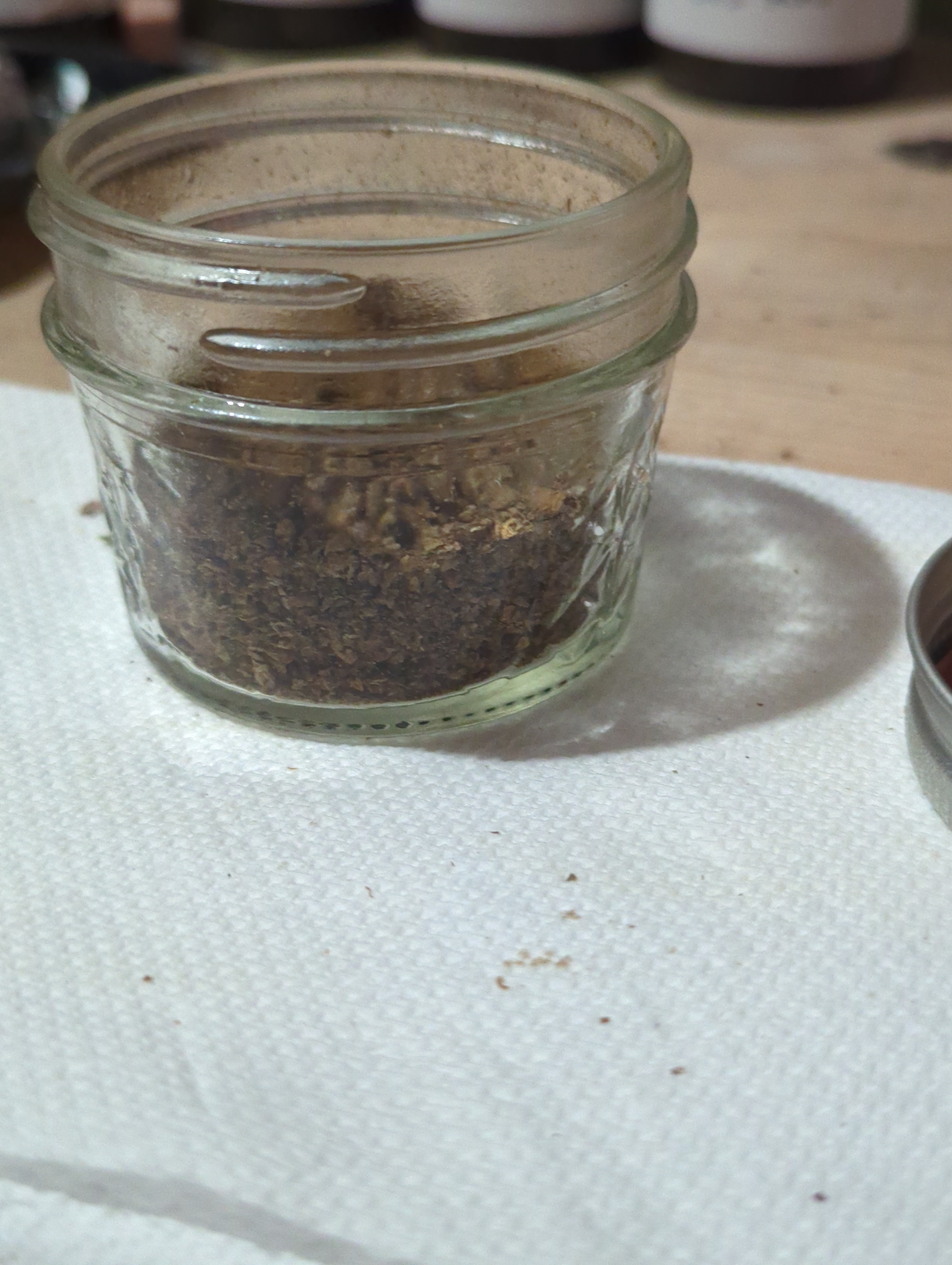
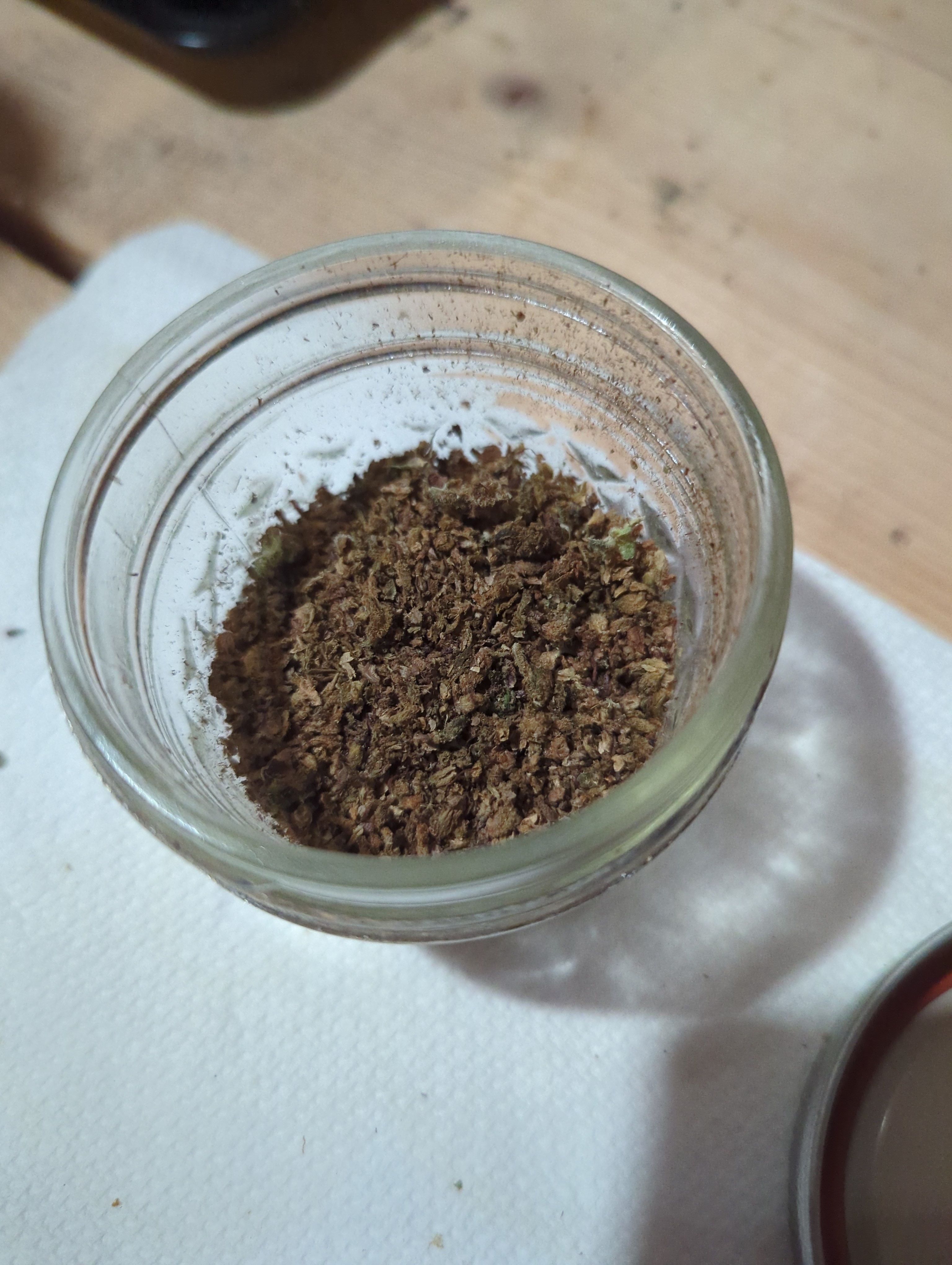
high proof food-safe ethanol solvent
Don’t let this scare you. This is, for all intents and purposes, a bottle of Everclear. We’ll get into details later but any grain alcohol over 190 proof is fine. Whatever is cheapest.
You CAN get by with 151 proof but it has more water and is harder to work with.
2 Cups of Granulated or Raw Sugar
Regular diamond granulated sugar is what I use. Raw works as well.
Powdered sugar won’t work. Splenda won’t work. Monkfruit sugar sort of works. I’ve not experimented with any other artifical sweeteners.
Freezer space
Because we’re working with avb, we’re going to make a “golden dragon” using QWET (quick wash extraction technique). This works by freezing the plant material and solvent (everclear) such that you get the maximum extraction from the plant material.
Colder temps make the solvent more efficient at extracting the things we want (cannibanois and terpenes) and not the green matter (like clorophyll) itself which has no real medicinal value.
If you do not have secure freezer space to store what is essentially high-proof alcohol and activated THC, you can do a “green dragon”. You can decide how long to let it sit.
Optional Resources
You do not need anything in this list but I use these to make things easier:
- small desk fan (air moving over the surface of the sugar speeds things up)
- food net (if you don’t have covered space outdoors)
- small mesh strainer
Overview of the process
Emily Kyle is where I learned to do this first. We’re generally going to be following her process except our starting material is already decarbed due to it being AVB. If you are not working with AVB, you’ll need to decarb your material first. This is beyond the scope of this particular post.
- make a green or golden dragon from our material
- pour our sugar into the glass baking dish
- pour the tincture over the sugar
- mix well
- let it evaporate
- put into storage container
We use a ratio of 2:1 - sugar:infused solvent.
Making a tincture
The term “tincture” has become a bit overloaded in cannabis circles. Without getting into specifics, your starting form is going to be an alcohol based tincture. Oil or vegetable glycerine tincures will not work for this.
You need to evaporate off the solvent so that the cannabinoids and other good stuff are left infused into the sugar crystals.
The question of green versus golden here is normally, for me, about time. QWET (golden) is a 24 hour process to get ready.
To get the maximum benefit from green dragon, you want to leave it for 30 days maximum. Additionally, this mechanism pulls in more unneeded plant material like chlorophyll that has no real benefit.
QWET is cleaner and quicker. You can do multiple “washes” as well if you want to attempt to get more good stuff off the plant but each wash gets less effective and more “dirty”. I usually only do one or two washes with decarbed material.
With AVB, I do a single wash and toss it. You’re already working with material that’s had most of the stuff you want removed when you vaped it.
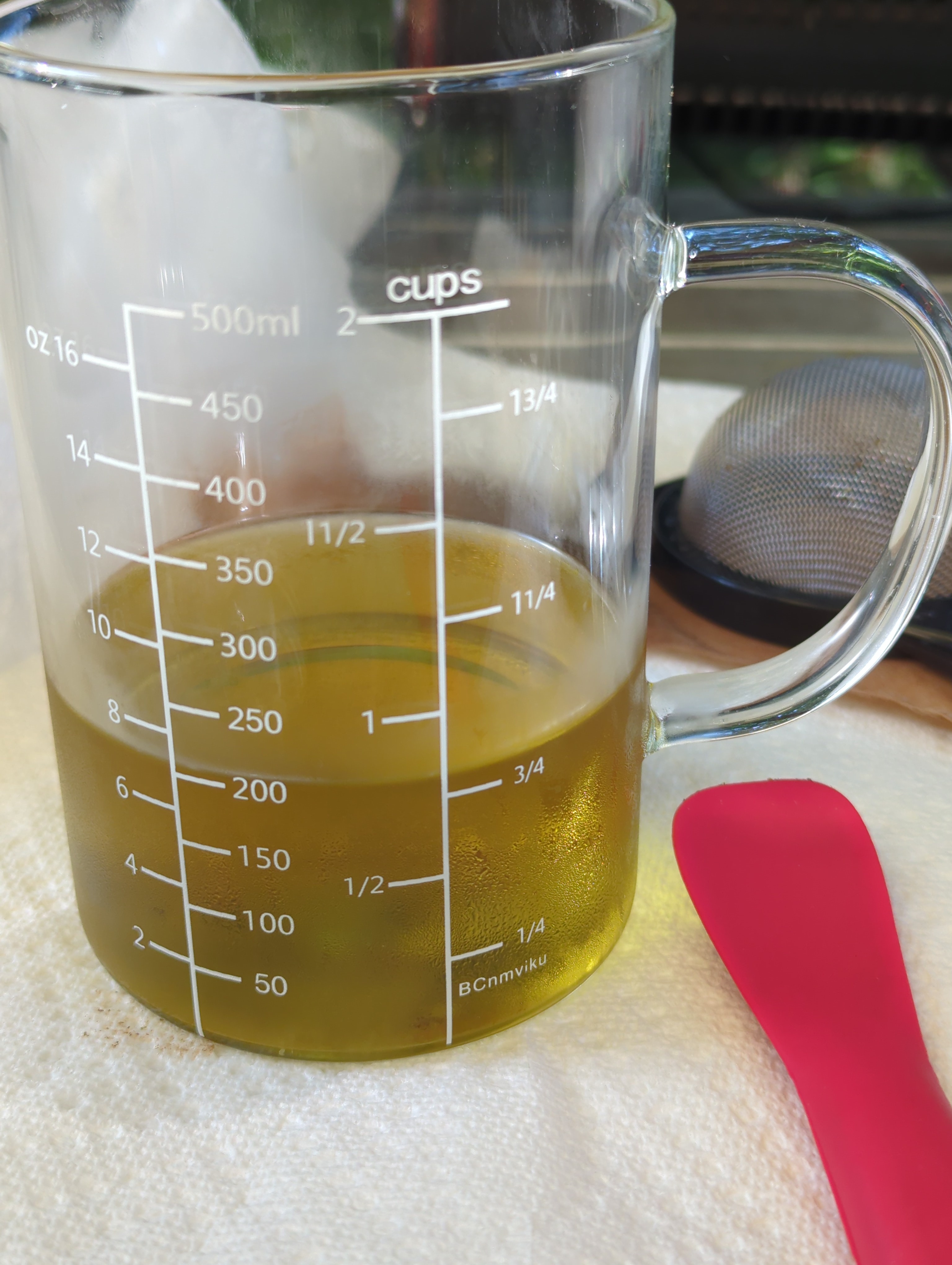
You can use whatever mechanism you want to strain the solvent but if you use coffee filters, make sure you use unbleached natural ones
The following images are of my process for straining and the final product:
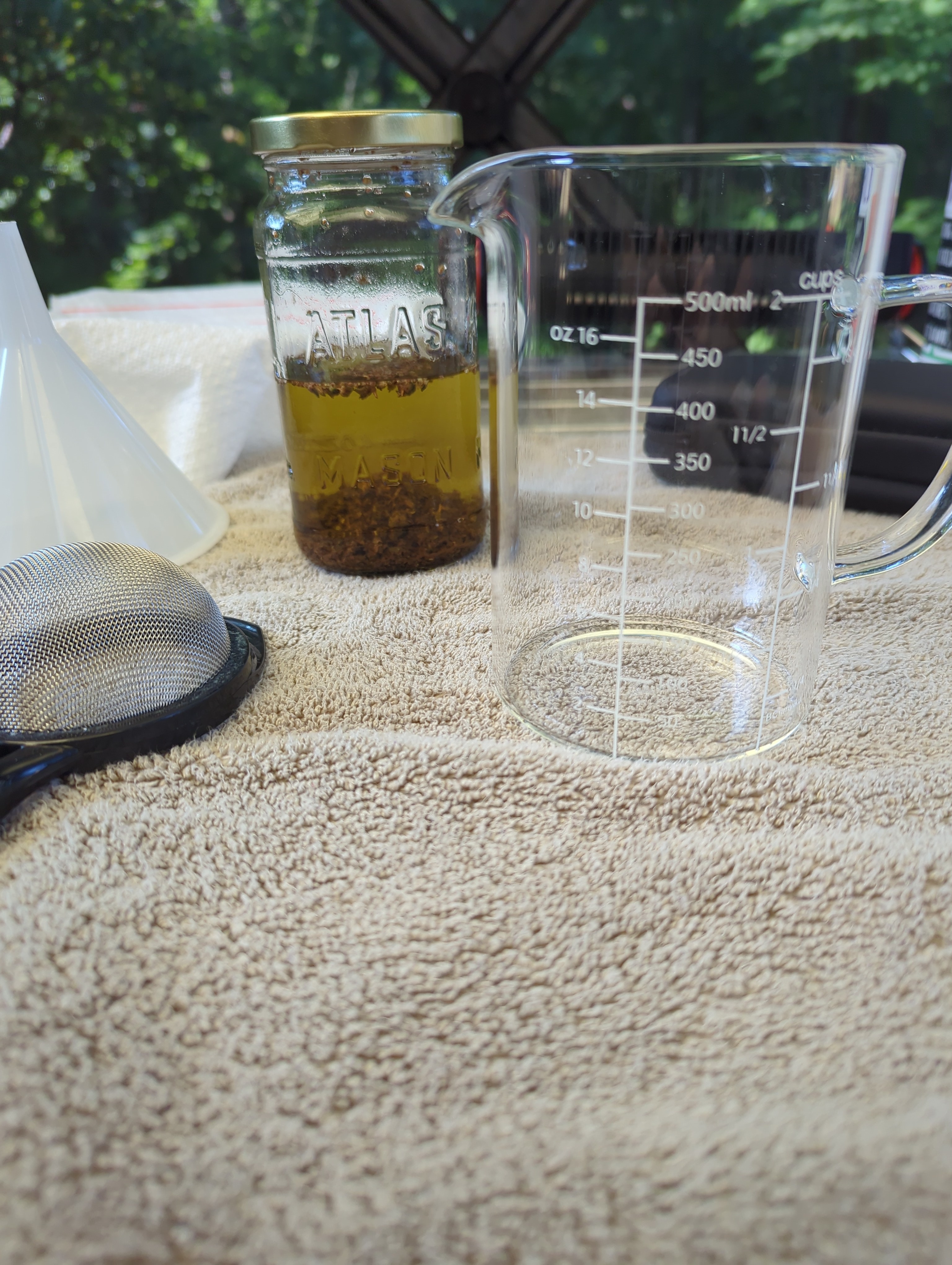
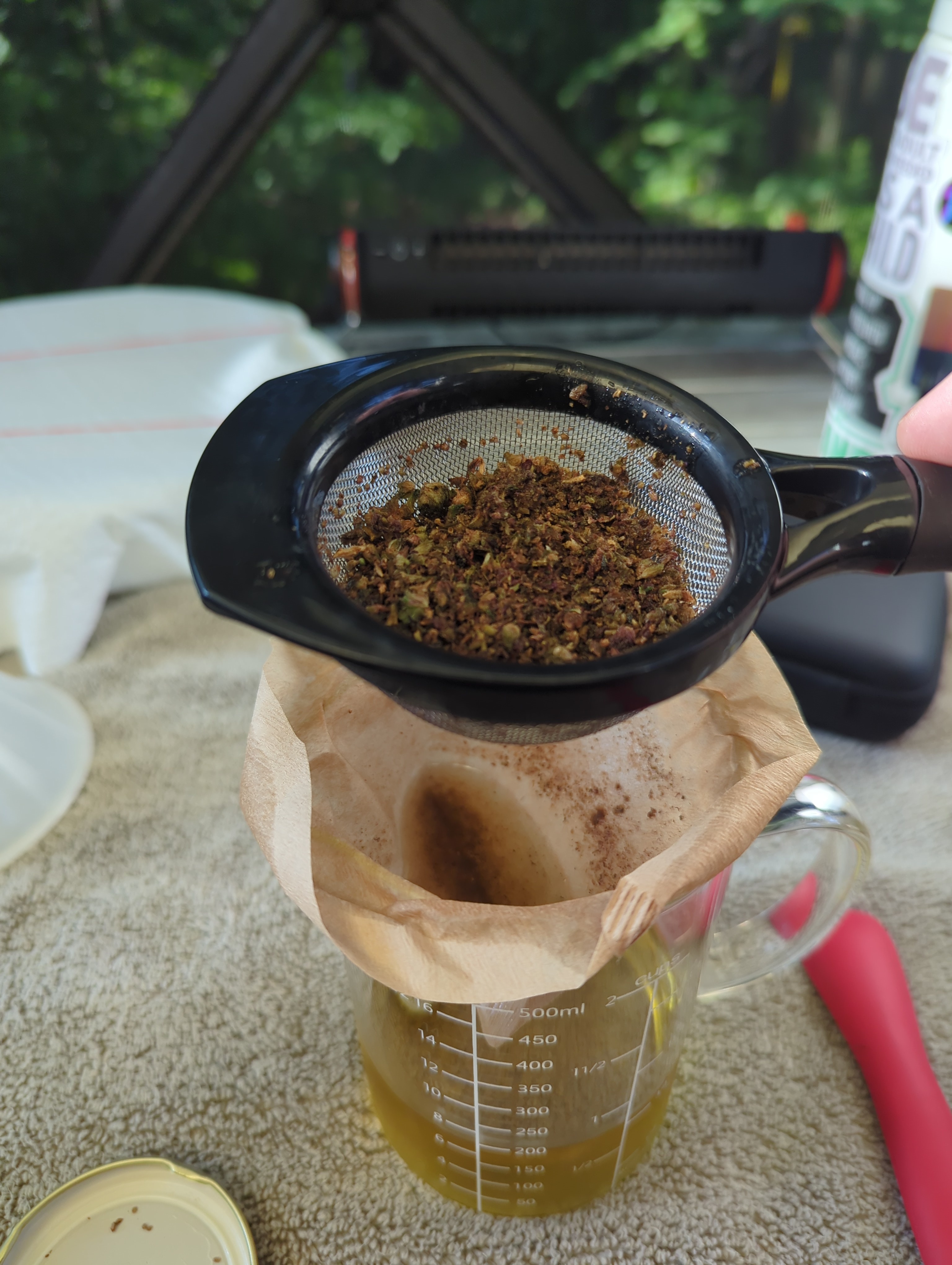
Saving your qwet leftovers
One thing I enjoy doing to REALLY use the last of the material is save my leftover plant material from QWET washes in a separate jar.
When that jar gets moderately full, I cover it with more solvent (everclear) and leave it in a cool dark place for 30 days.
I make a green dragon from it. In my experience, I still manage to pull out a bit more good stuff and I can convert it to feco for later use in edibles.
Combine with sugar and mix well
The key to good evaporation of your solvent is surface area and air flow.
I use an 8x8 pyrex baking dish for the process along with a small portable fan.
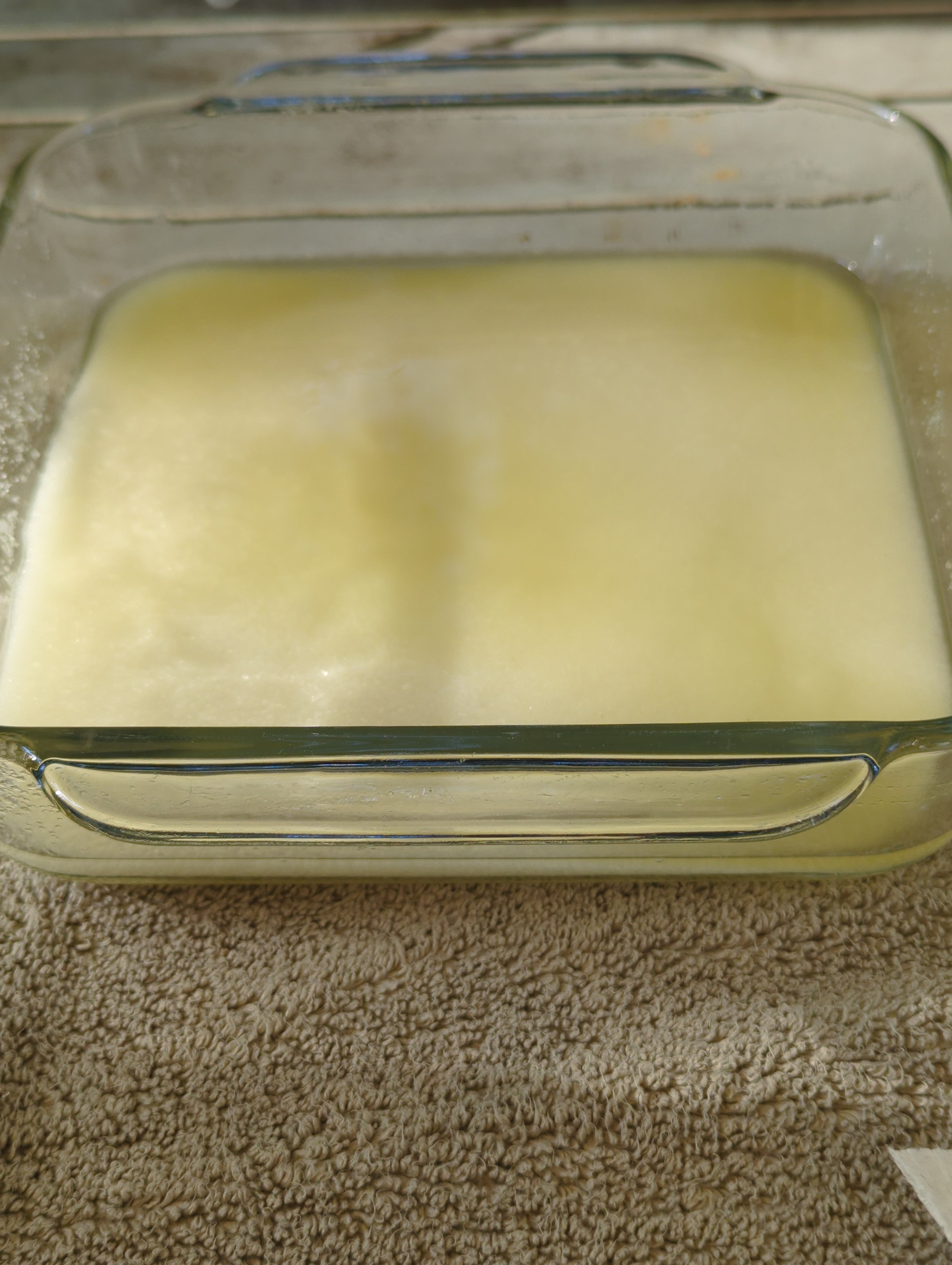
When mixing things together, you’re going for the consistency of wet sand. At the ratios we use, you’re likely going to have some small puddles of solvent as well. This is fine and these puddles will soak into the sugar more as it evaporates off.
This is how it looked after initially mixing in the tincture:
Evaporation
This is the “scariest” part of the process because you’re working with flammable vapors from the everclear evaporating. This is why it’s best to do this outside or near an open window with a fan blowing out.
Do not bring this anywhere near an open flame. Don’t put it in a gas oven or on a gas stove top to speed up the process unless you want to risk blowing yourself up
The hardest part of doing this outside for me is bugs. I’m fortunate enough to have a screened-in porch and other outdoor spaces with “protection” from bugs and such.
Even so, I will cover the dish with paper towels or cheesecloth and blow air under it with creative positioning.
This process, without heat, will likely take 12+ hours.
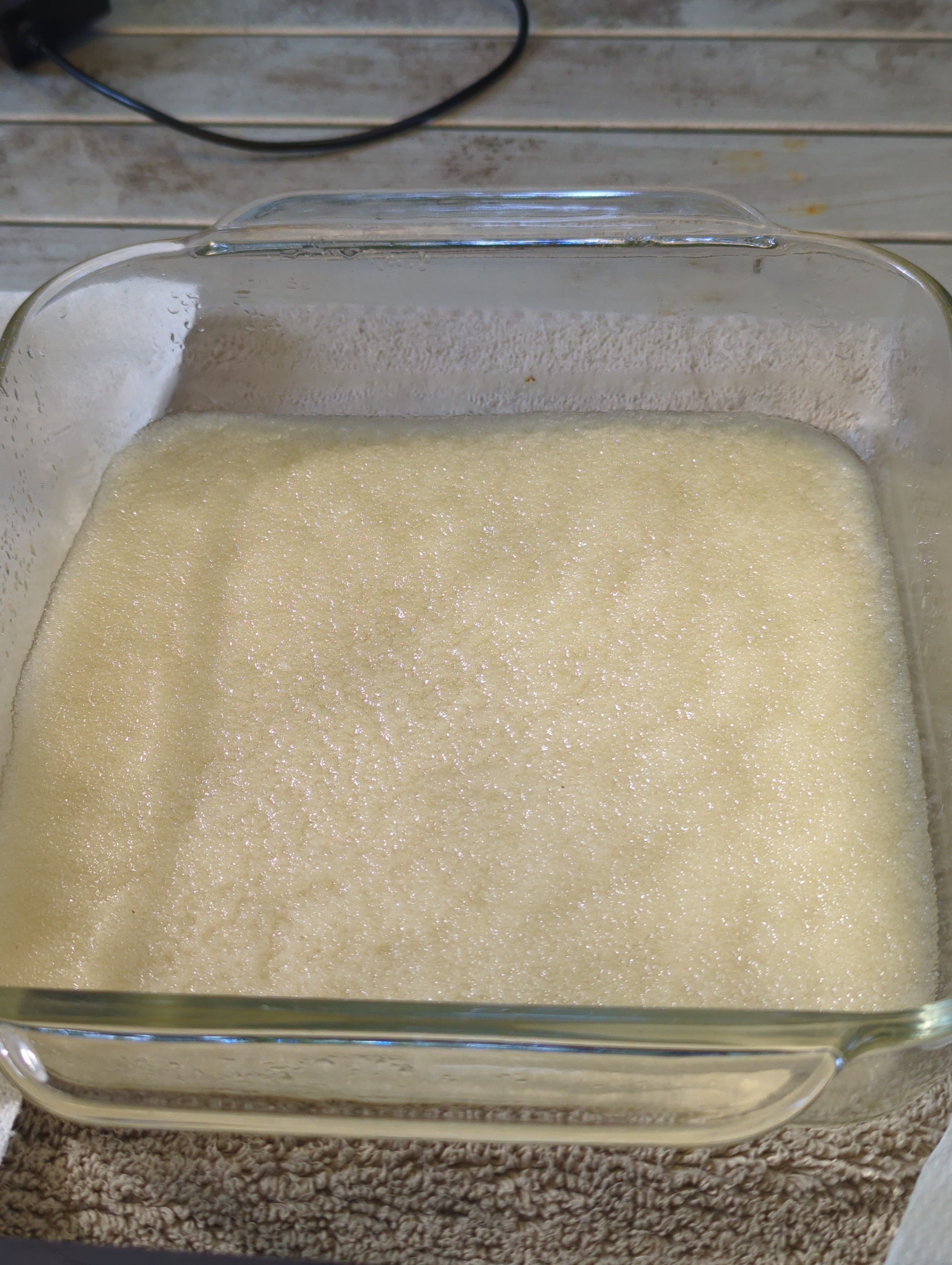
During the first 2-4 hours or so, I don’t bother checking in on it or stirring it around much. Maybe once or twice. It really depends on how quickly I see it evaporating.
This is what state it was in before I stirred for the first time:
Later on, I’m mixing things around every hour or so. Initially I use a silicon spatula for stiring.
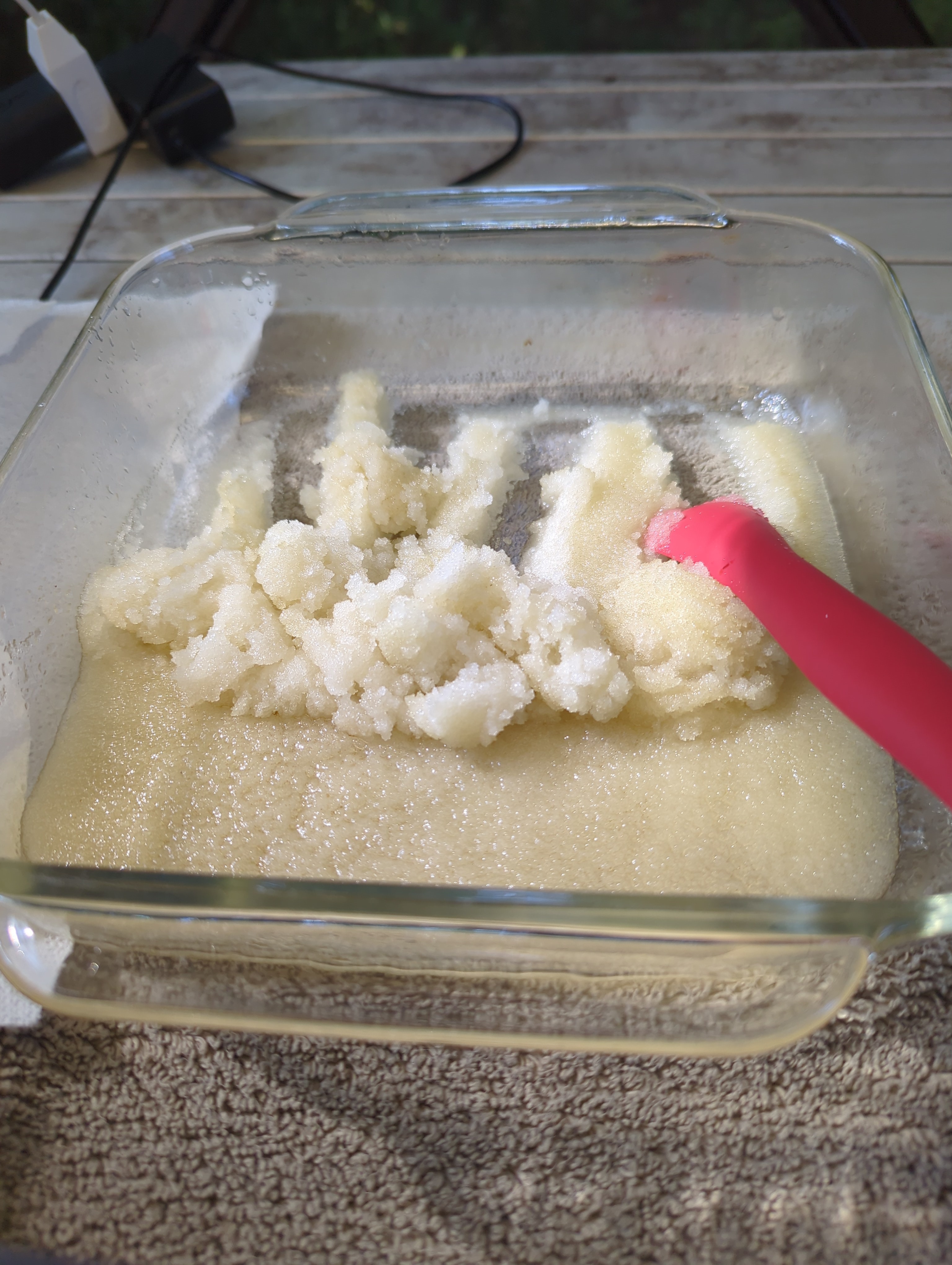
Near the end I use a metal fork as I’m more focused on breaking up larger clumps and getting more material exposed to air.
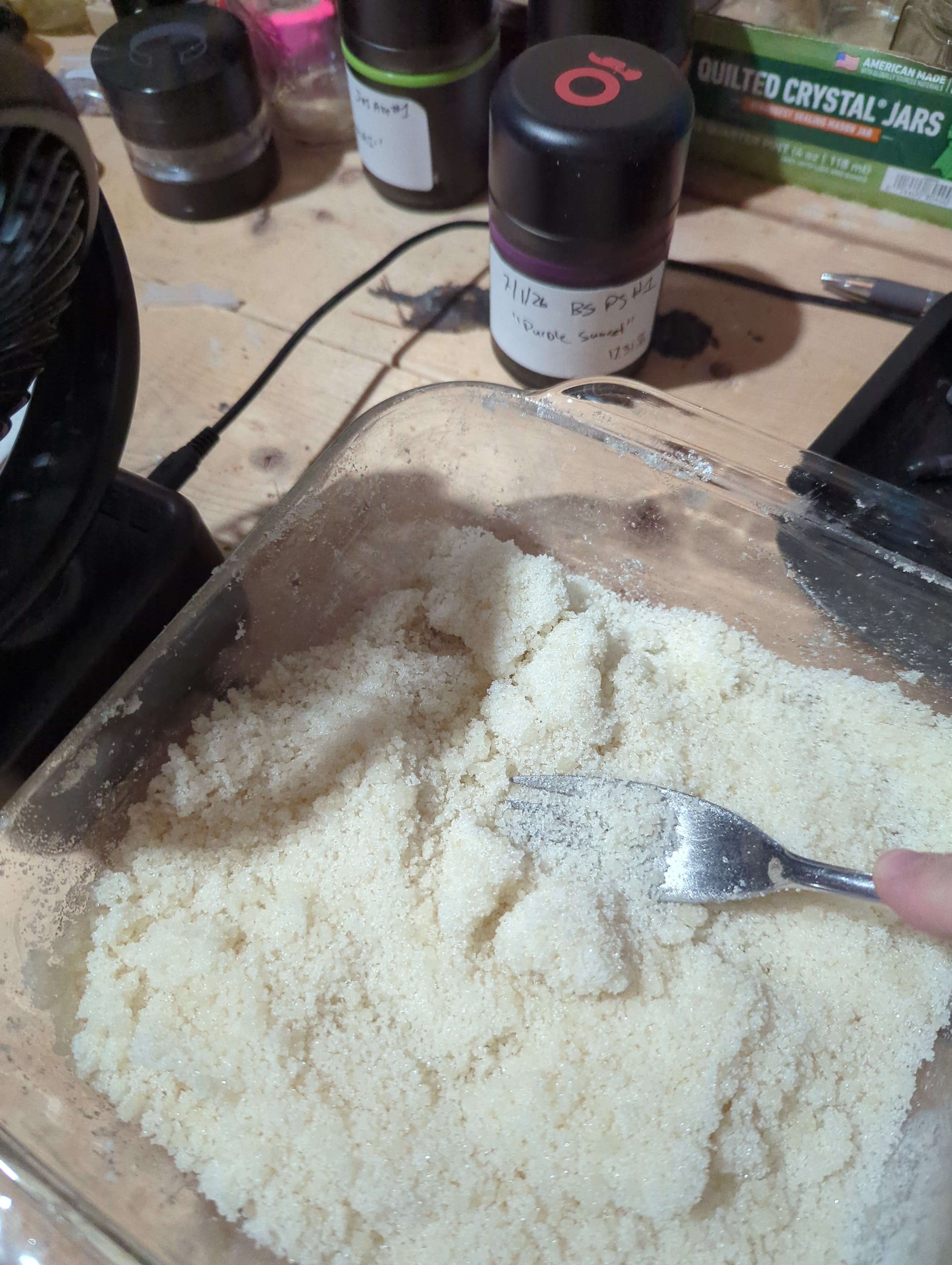
You do not have to stir your sugar if you don’t want to but you’re going to need to figure out how to break everything down again in the end. Some folks just let it dry to a solid sheet of sugar and break it up in food processors after the fact
Eventually, all that’s left is water content and that can safely be dried out indoors with the fan blowing over it.
How to know when it’s ready
My general rule of thumb is “it’s not ready until it’s not sticky”. Depending on humidity and other things, even after 12 hours the sugar can be “sticky” which means there’s still moisture.
Crystalization is a good sign that you’re near the end as well.
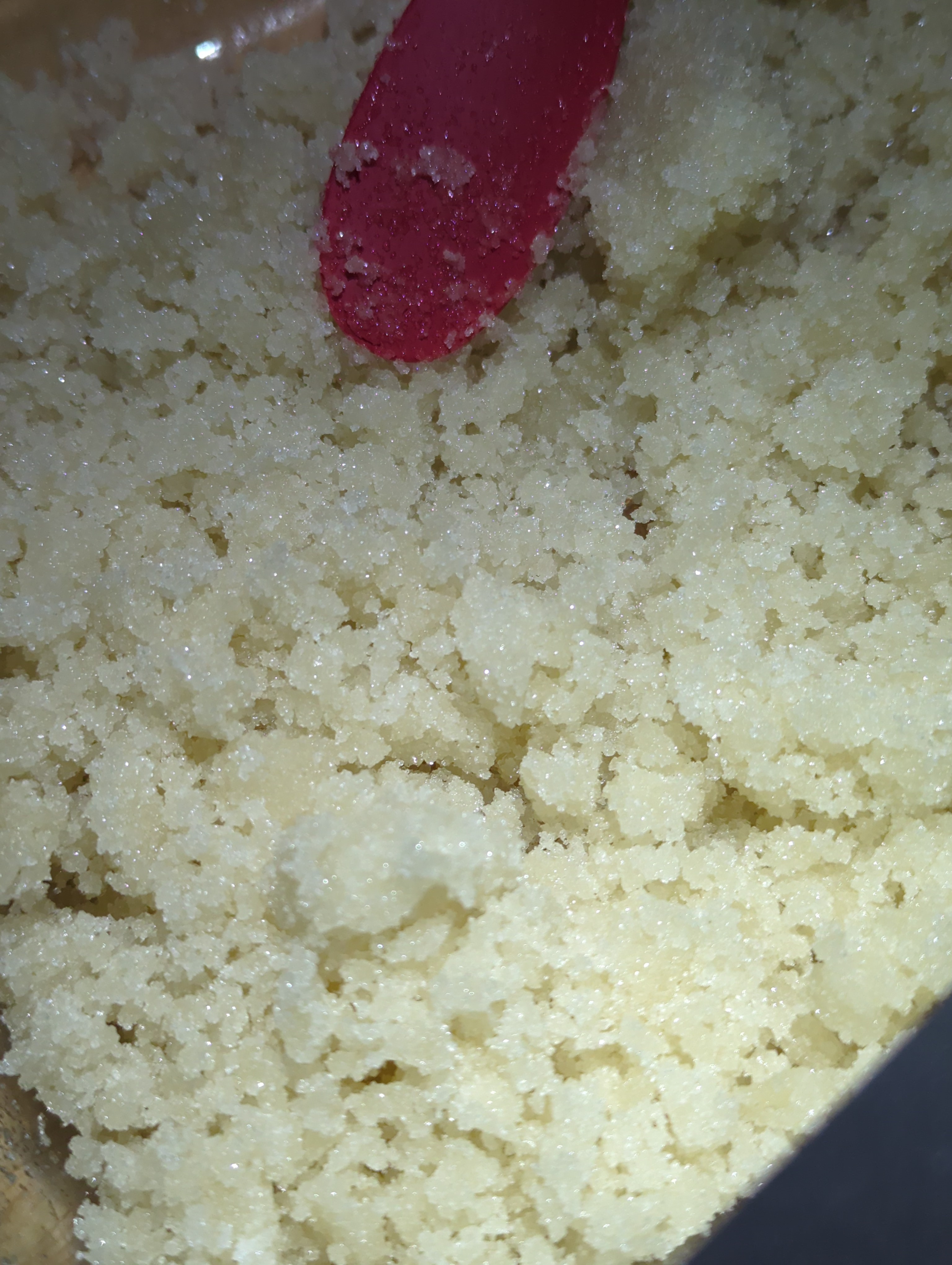
At the end, I can safely touch the sugar with my hands with none of it sticking. You should always wash your hands very well or use rubber food-safe gloves to touch it.
Packaging and labeling
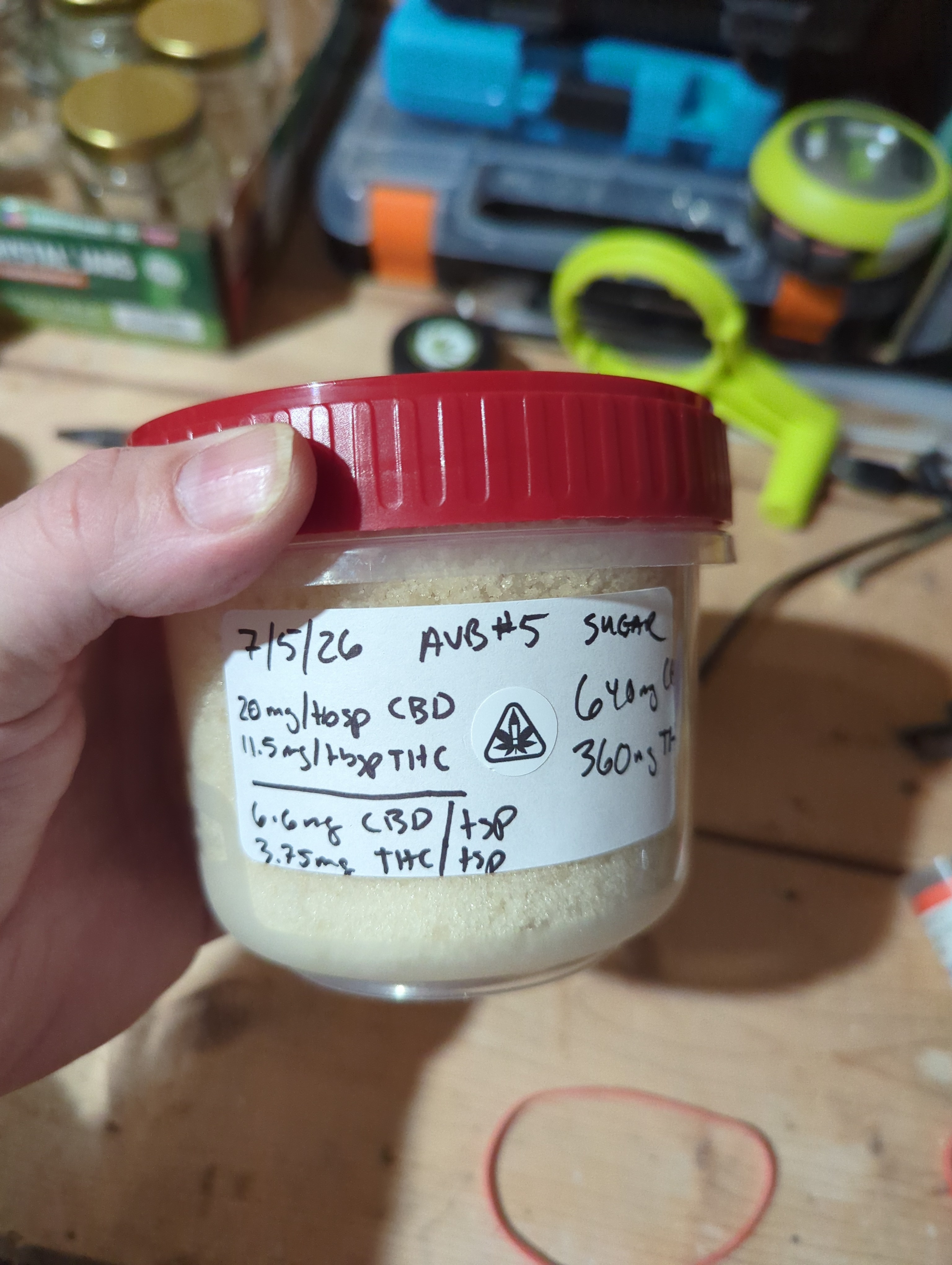
When I’m done, I store in an appropriately sized food safe storage container with a lid clearly labeled. Much like flower, you can use two containers - one for daily use - and one for bulk storage. In Georgia during the summer, everytime you open the container you let humidity in. By keeping your working set in a smaller container for daily use, the bulk of your material stays dryer in the long-term container.
DO NOT SKIP LABELING YOUR PRODUCT
Even if you live alone and never have visitors, please clearly label all cannabis related products you make. You can purchase small “leaf” labels off Amazon or other sticker shops that you can stick on things.
It is your responsibility to be responsible.
Calculating your potency
I use a device called a tcheck3 to measure my potency. I do this after I’ve made my tincture before any evaporation.
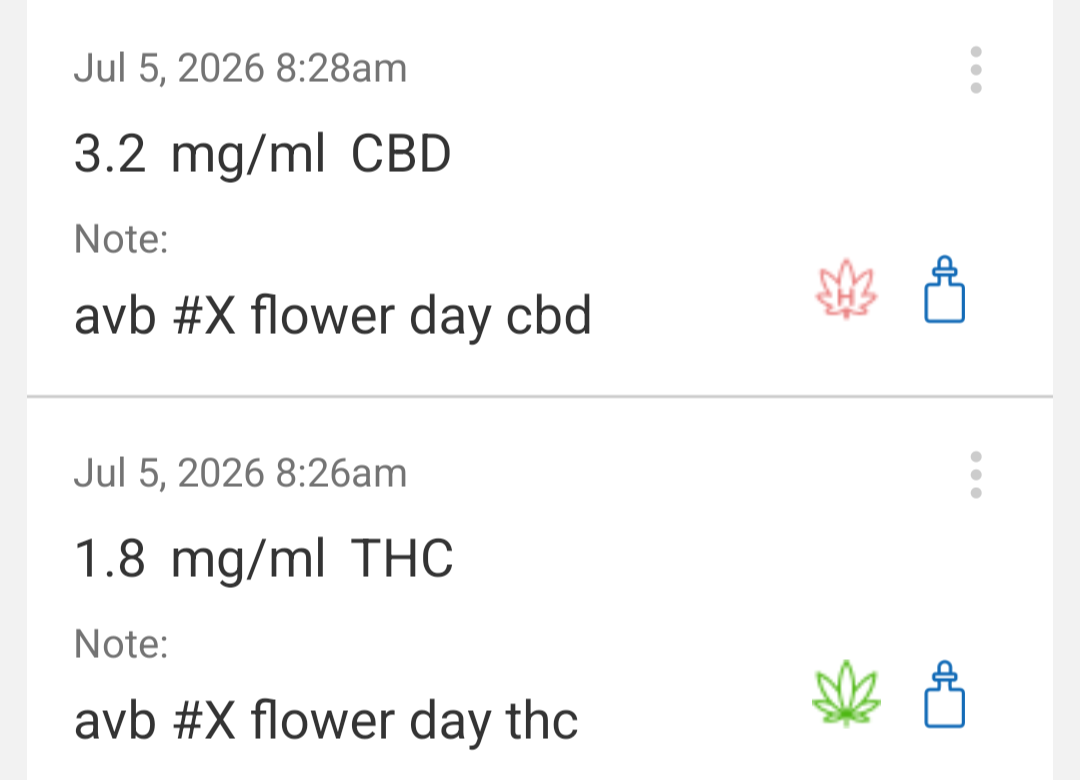
You do not need this device to calculate potency
I purchased this device because I wanted exact numbers as I was trying to calculate a daily dosage. I got it real cheap.
You can use the avb preset on calc420 but this one is a bit more focused on AVB usage and slightly easier.
After using the potency calcs, you’ll end up with a number of total milligrams of whatever cannabinoid (thc, cbd, cbg, …) you have. That number will be divided by a serving size of your total infused product to calculate your dosage.
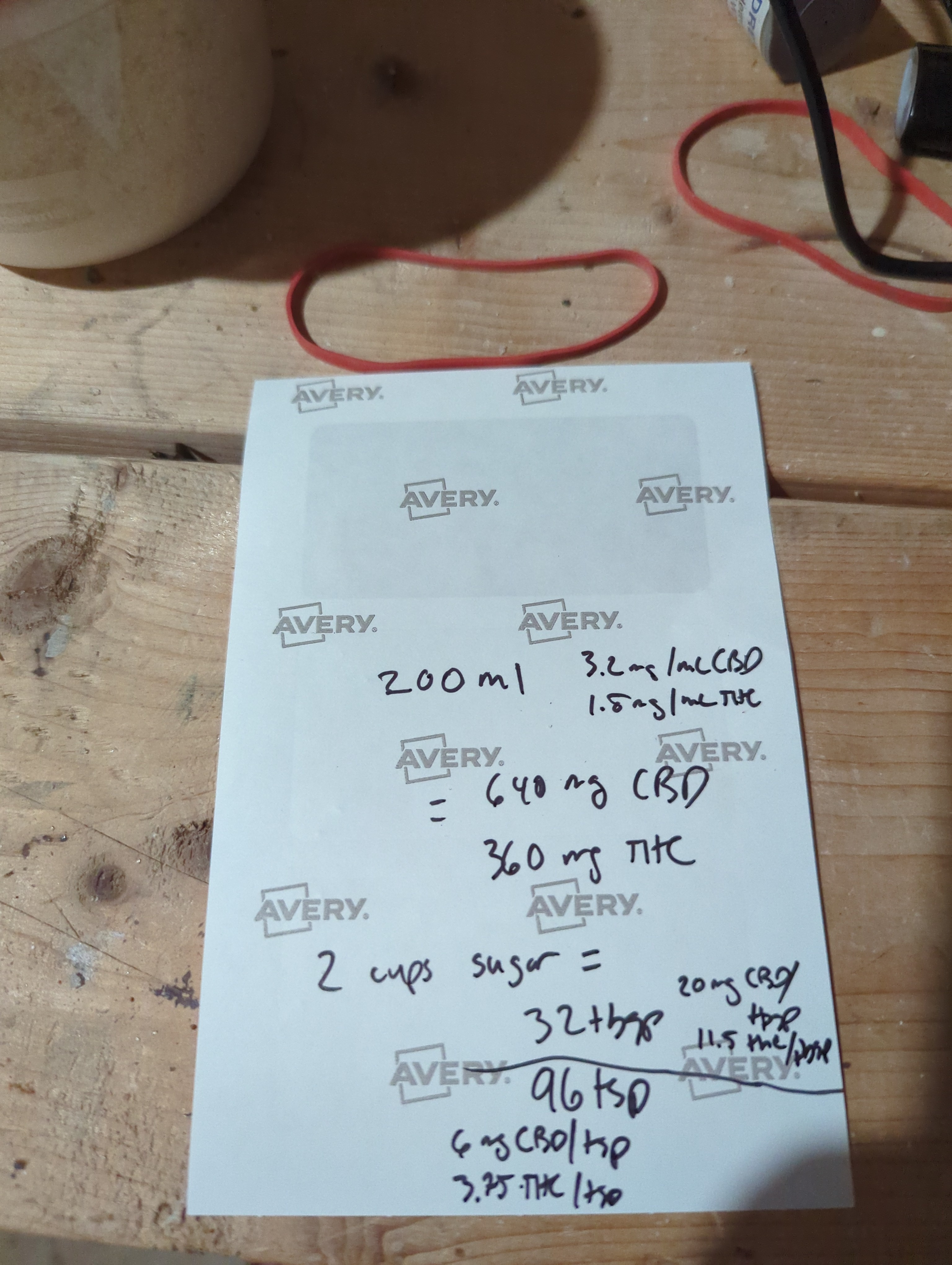
In my case, using my tcheck3 I calculated that my 2oz jar of AVB had:
- 640mg of CBD
- 360mg of THC
As my avb had some other material mixed in, there are others in there as well but tcheck3 can only test for those two. This was calculated based on 1 cup of solvent that I used to strip my plant material.
Mixing this into two cups of sugar (32 tablespoons/96 teaspoons) and letting it evaporate off leaves me with:
- 20mg CBD/tbsp
- 11.5mg THC/tbsp or
- 6.6mg CBD/tsp
- 3.75mg THC/tsp
Here’s me showing my work:
If you’re curious why this had such interesting ratios of CBD to THC is likely because I had some leftover high CBD material in my jar along with new stuff. There was also likely high contents of THCV and CBG in there as well since I add those frequently as well. The tcheck just can’t detect those.